Discovering water damage in your home or business is stressful. The uncertainty of where the leak is coming from and how far it’s spread can feel overwhelming. Traditional methods often mean tearing into walls or ceilings to find the source. It is a disruptive, expensive process with no guarantees you’ll locate every affected area.
Modern moisture detection technology changes that equation entirely. Professionals can use advanced thermal imaging and precision moisture meters to find hidden leaks without unnecessary demolition. This article explains how restoration professionals use infrared cameras to pinpoint moisture behind surfaces, giving you accurate answers without the guesswork or destruction.
What Is Thermal Imaging for Water Detection?
Thermal imaging for water detection is a noninvasive method that reveals temperature differences behind walls, floors and ceilings. Think of it as an X-ray for moisture. The camera doesn’t see through surfaces, but it detects the thermal signatures that hidden water creates.
Here’s how it works — when water evaporates from building materials, it cools the surface. These temperature variations are invisible to the naked eye, but a thermal camera moisture detection system captures them as distinct color patterns on its display. Cooler areas typically appear as blue or purple zones, while warmer, drier areas show up as orange or red.
Infrared cameras are a powerful tool for finding moisture problems without invasive testing. These cameras don’t directly detect water. Instead, they identify the cooling effect caused by evaporation. As a recognized nondestructive evaluation technique, thermal imaging has become standard practice for identifying construction deficiencies, such as hidden moisture intrusion.
Telltale Signs of a Hidden Water Leak
You often sense something’s wrong before you see visible damage. Once you recognize these early warning signs, you can determine whether your concerns warrant a professional moisture inspection.
- Persistent musty odor with no visible source: A damp, earthy smell that doesn’t go away often signals hidden moisture growing mold behind walls or under floors.
- Peeling, bubbling or discolored paint or wallpaper: Water trapped behind surfaces causes paint and wallpaper to lose adhesion and develop brown or yellow stains.
- Warped baseboards or flooring: Wood materials absorb moisture and swell, causing boards to buckle, cup or separate from walls.
- Unexplained spike in your water bill: A sudden increase in water usage with no change in your habits typically indicates a leak somewhere in your plumbing system.
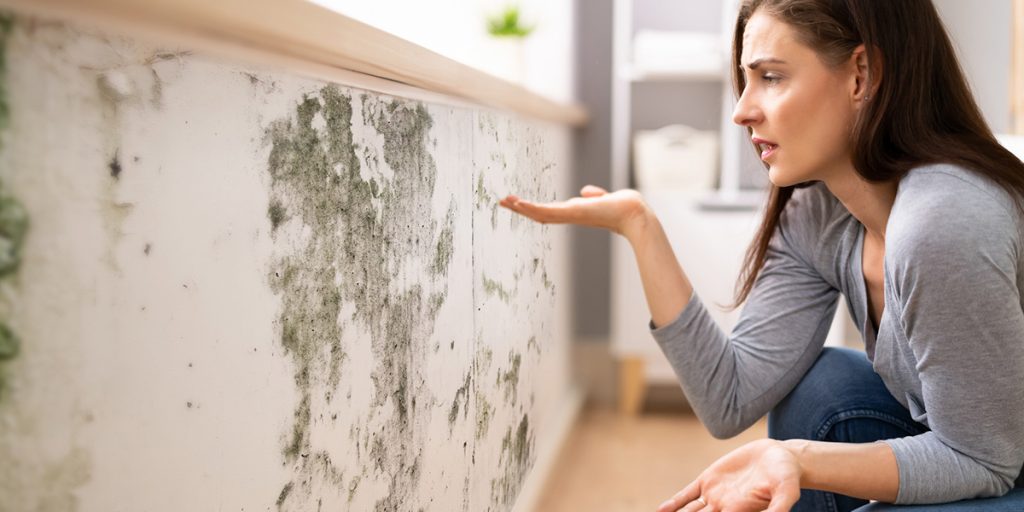
- Visible mold or mildew on non-shower walls: Mold appearing in dry areas like bedrooms or hallways points to a moisture source behind the surface.
How Infrared Cameras Pinpoint Hidden Leaks
Finding hidden moisture isn’t just about having the right equipment — it’s about using that equipment correctly. Certified professionals follow a formal, multistep process to deliver accurate results you can trust.
1. Scanning for Cool Spots With a Thermal Camera
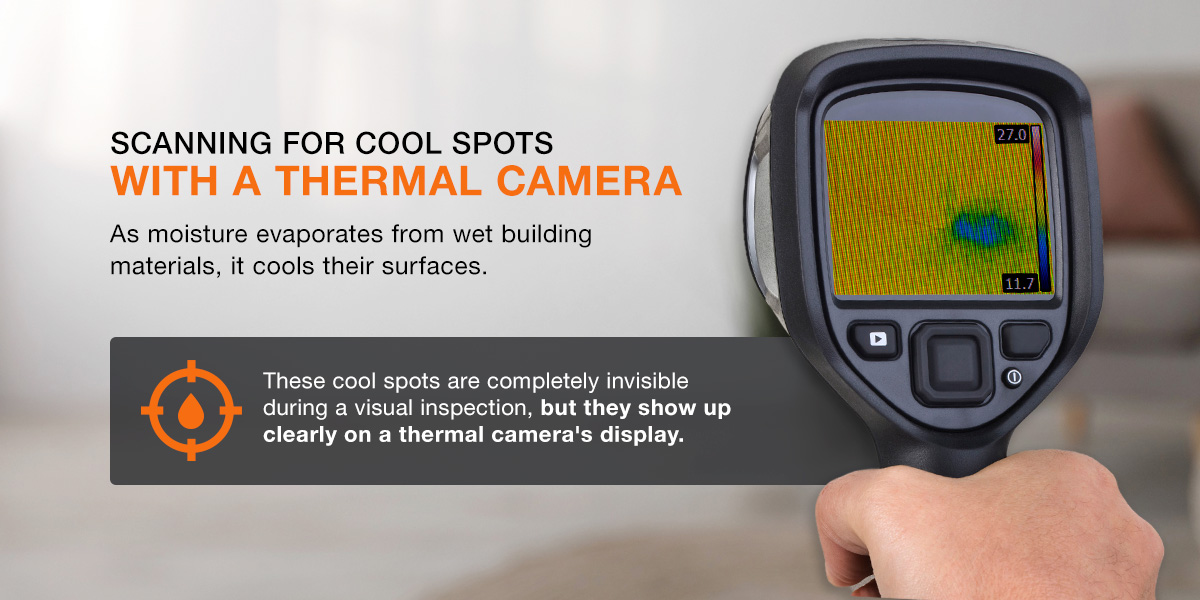
As moisture evaporates from wet building materials, it cools their surfaces. These cool spots are completely invisible during a visual inspection, but they show up clearly on a thermal camera’s display.
The technician will scan the walls, floors and ceilings and watch for temperature anomalies — areas that appear cooler than their surroundings. On most thermal imaging displays, these moisture-affected zones appear as blue or purple patches against warmer orange and red backgrounds. This infrared leak detection method allows professionals to quickly survey large areas and identify potential problem zones without removing a single piece of drywall.
2. Confirming Moisture With Precision Meters
Thermal imaging identifies potential problem areas, but moisture meters confirm the presence and extent of water saturation. This two-step verification process separates professional moisture mapping from guesswork.
Once the thermal camera highlights cool spots, technicians use penetrating and non-penetrating moisture meters to verify actual water content in those materials. Penetrating meters use pins that insert slightly into surfaces to measure moisture levels within the material. Non-penetrating meters scan the surface without causing any damage.
This infrared moisture-detection process adheres to the industry’s standards for water damage restoration. By combining thermal imaging with moisture meter readings, professionals can document where water has traveled, how much moisture is present and which materials need attention. This precision prevents unnecessary repairs from false positives and ensures no hidden moisture gets left behind.
Where Can Thermal Imaging Find Hidden Water Leaks?
Thermal imaging technology excels at locating moisture in areas where visual inspection falls short.
- Behind walls from slow plumbing leaks: Pipes hidden in walls can develop pinhole leaks or loose fittings that drip for weeks before visible damage appears.
- Under floors from appliance failures: Washing machines, dishwashers and water heaters often leak onto subfloors, where the damage remains hidden beneath finished flooring.
- Around windows and doors from weather intrusion: Improperly sealed openings allow rainwater to seep into wall cavities during storms.
- In ceilings from roof leaks: Water can travel along rafters or through insulation before finally staining a ceiling, making the entry point difficult to locate visually.
- Beneath concrete slabs from foundation issues: Slab leaks from pressurized pipes under concrete create moisture that thermal cameras can detect without breaking through the foundation.
- Within HVAC systems: Air conditioning units and ductwork can generate condensation that saturates surrounding insulation and framing.
Advantages of a Noninvasive Infrared Inspection
Thermal imaging offers significant advantages over traditional visual inspection methods and invasive exploratory techniques. When combined with moisture meters for confirmation, this technology addresses the primary concerns property owners face when dealing with suspected water damage.
- Speed and efficiency: Technicians can quickly scan large areas to narrow down the source of the problem, often completing a comprehensive assessment in hours rather than days.
- Noninvasive approach: Thermal camera moisture detection technology prevents the expense and mess of unnecessary demolition, preserving your property while still delivering definitive answers.
- Accurate identification: The process precisely identifies all affected areas, ensuring no hidden moisture gets left behind to cause mold or structural rot.
- Prevents mold damage: Undetected moisture can lead to mold growth in as little as 24 to 48 hours. Thermal imaging water damage assessment gives you the fast answers you need to begin remediation before secondary damage develops.
- Insurance documentation: Water damage is the second most common homeowners insurance claim, and insurance companies require proof of the damage’s location and extent. Thermal imaging provides that proof in a format that adjusters understand and accept.
Contact Rhode Island Restoration for a Professional Assessment
When you suspect hidden moisture in your property, you need answers fast — and you need them from certified professionals who use proven technology. Rhode Island Restoration combines Institute of Inspection, Cleaning and Restoration Certification-certified expertise with state-of-the-art thermal imaging equipment to locate water damage quickly and accurately.
We’re not only leak detectors. As your one-stop restoration partner, we handle everything from initial emergency response to final reconstruction and work directly with your insurance company to streamline the claims process. Our team is available 24/7 to respond to water emergencies.
Contact us today or call 401-834 FIRE (3473) for a professional moisture assessment.