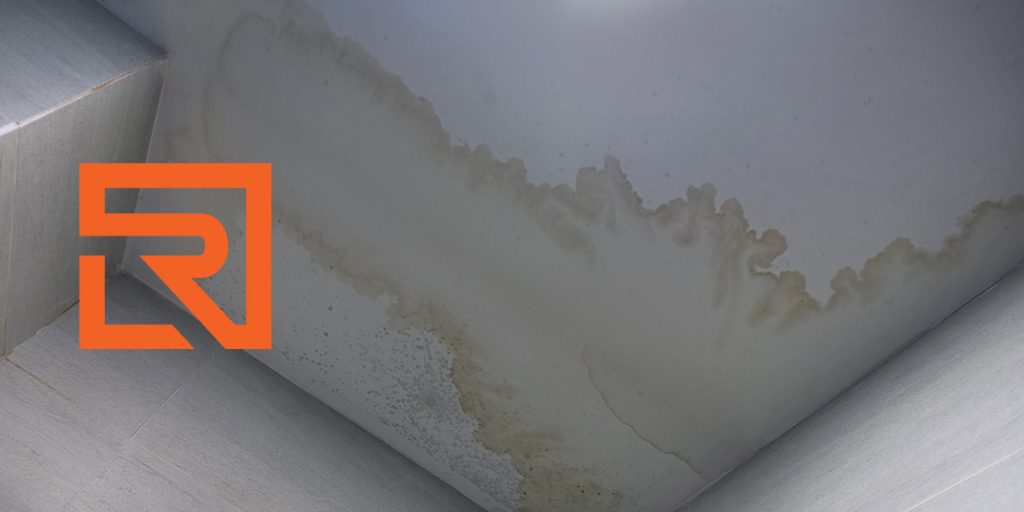
Discovering water damage in your ceiling can be stressful. It can affect the health and safety of your family or employees, so it is important to address it as soon as possible. Following these steps can alleviate your worries and protect your residential or commercial property.
1. Watch for Signs
Water damage signs can be subtle or obvious depending on the severity of the water leak. As you watch for signs of damage, you can quickly deal with the issue and prevent further problems. Monitor your ceiling for red flags such as:
- Peeling, bubbling, cracked or flaking paint
- Musty or unusual smells
- Sagging, bowed ceiling sections
- Light brown water rings
- Mold growth
- Hairline cracks
- Visible stains that are dark, yellow or rust-colored
- Texture changes
- Higher utility bills
2. Find the Leak
Before fixing any visible ceiling damage, you first need to find and treat the source of the water leak, or else you will be making the same surface repairs over and over. You also need to fix the root problem of the water leak to minimize structural damage and mold growth, which could lead to health complications such as rashes, nausea, allergic reactions and asthma attacks.
Water could be pouring in from a variety of different locations, especially since it can travel long distances before accumulating in one spot. Another indicator you could use is the weather. If it is raining when you find moisture, you may have a roof leak. If it is not, you may have a plumbing leak.
Common Causes of Plumbing Leaks
Plumbing leaks can occur due to:
- Loose supply lines
- Missing caulk
- Old, corroded pipes
- Excessively high water pressure
These issues can create broken pipes and loose connections, causing water leaks. Some plumbing-related water leaks may be obvious, but if the problematic pipe area is not clearly visible, you can lay toilet paper sheets along the pipes to identify where the moisture is coming from. Plumbing professionals can also provide valuable insight.
Common Causes of Roof Leaks
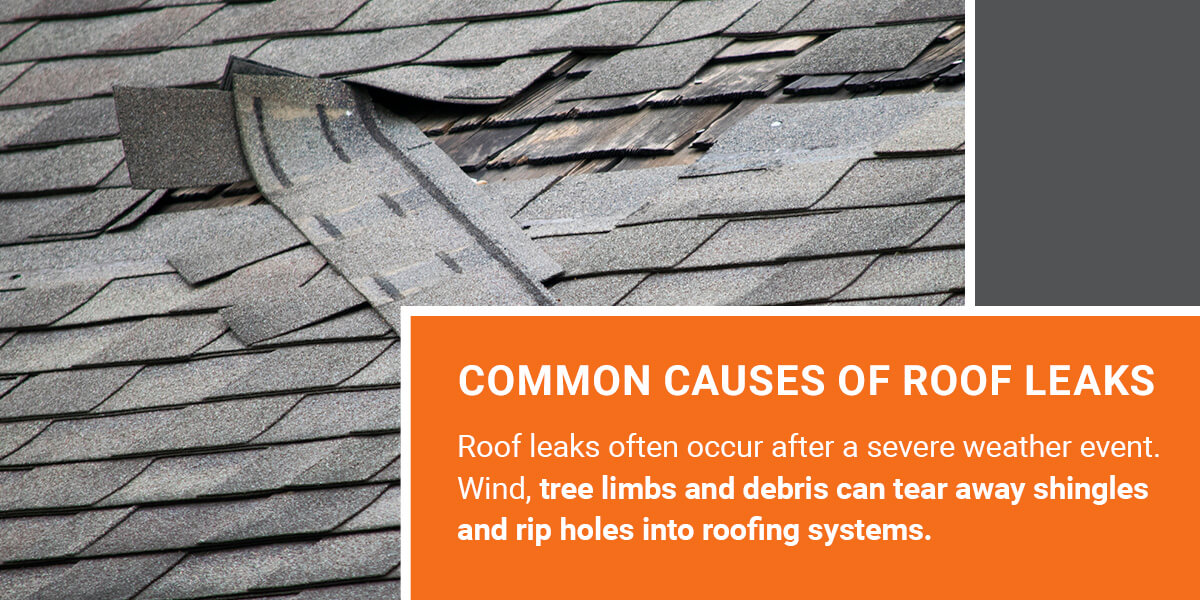
Roof leaks often occur after a severe weather event. Wind, tree limbs and debris can tear away shingles and rip holes into roofing systems, allowing water to seep inside. Animals can also cause roof damage that can lead to leaks. Faulty gutters, chimney flashing and other roof penetrations can cause water to pool and seep into the building.
Roof damage can be challenging to isolate, so you may need a professional to inspect the roof and identify damage. Water can follow structural elements from the damaged roof area to far away parts of your ceiling. A roofing expert can recognize the water’s path and any potential water damage along the way.
3. Stabilize and Repair the Leak
Once you have discovered the water leak, you want to control it so a professional can repair it effectively. Depending on the leak’s source, you may need to shut off the water or put a tarp over the roof damage. Move valuable items, furniture and décor out of the area, or cover them with a waterproof material like a tarp or plastic to protect them during the repair.
Drywall can absorb water and cause it to disperse and pool in other locations. To prevent water from leaking anywhere else, poke a hole in the middle of the ceiling damage with a screwdriver or a similar tool. The hole will encourage the water to drain from one controlled spot instead of spreading across the ceiling. Keep a tarp and a bucket underneath the hole to catch dripping water.
If the leak is severe, you may need a professional to repair it to ensure water does not cause any more damage to your property. A professional can properly and efficiently repair a water leak while noting and addressing other potential issues that could lead to more damage.
4. Remove Damaged Materials
If water damage is minor, you may be able to let the ceiling dry and continue with repairs. If water has seriously damaged your ceiling, you will need to remove the affected materials so the area can dry properly.
Drywall is absorbent and can continue to cause visual and structural issues if you do not remove the damaged portions. Check the insulation above the drywall to see if the backing is wet and needs to be removed. Always wear a respirator when working around insulation, and lay out a drop cloth to help catch falling debris throughout the removal process.
5. Let the Ceiling Dry
The ceiling must be completely dry before attempting repairs, especially within the ceiling cavity. Any trapped moisture behind the drywall can lead to mold growth and more water damage. Because drywall holds onto water so well, it can render repairs ineffective if it is wet at all.
Minor leaks may dry up on their own with a little time, but larger leaks will need extra attention to ensure they dry completely. Open up part of the ceiling and air it out with a fan. Proper airflow above and below the ceiling is key to preparing for an effective repair.
6. Repair the Ceiling
Once the ceiling is dry, it is ready for repairs. Depending on the severity of the water damage, you may have already removed large portions of the ceiling. A repair may require new insulation, drywall, texture and paint to return the ceiling to its original state. For complex repairs such as these, it is best to leave them to a professional who has experience and expertise working on large reconstruction projects.
If water damage is minimal, you can touch up the area with primer and paint. Depending on the size of the water stains or other signs of water damage, it may be beneficial to repaint the entire ceiling to ensure a smooth and seamless finish.
7. Call a Professional Adjuster
Home insurance often covers water damage when it is accidental or sudden, but navigating the claims process can be stressful and overwhelming. Calling a professional adjuster, such as Performance Adjusting, can save you time and hassle while ensuring you get the settlement you need to restore your home or business.
The trained and licensed experts at Performance Adjusting can handle your insurance needs for you, communicating and negotiating on your behalf so you can focus more on repairing your property. As a water damage claim specialist, Performance Adjusting can assist with finding water damage solutions for your unique needs and help you with the details of the post-disaster process by partnering with Rhode Island Restoration.
Repair Ceiling Water Damage With Help From Rhode Island Restoration
Rhode Island Restoration is a local disaster restoration company that has proudly served communities throughout Rhode Island since 2004. We understand that timing is critical when dealing with water problems, which is why you can reach us 24/7 for emergency services. We will be there in your time of need, using innovative tools and technologies to assess and mitigate water damage.
Give us a call or contact us online to learn more about our water damage repair services.