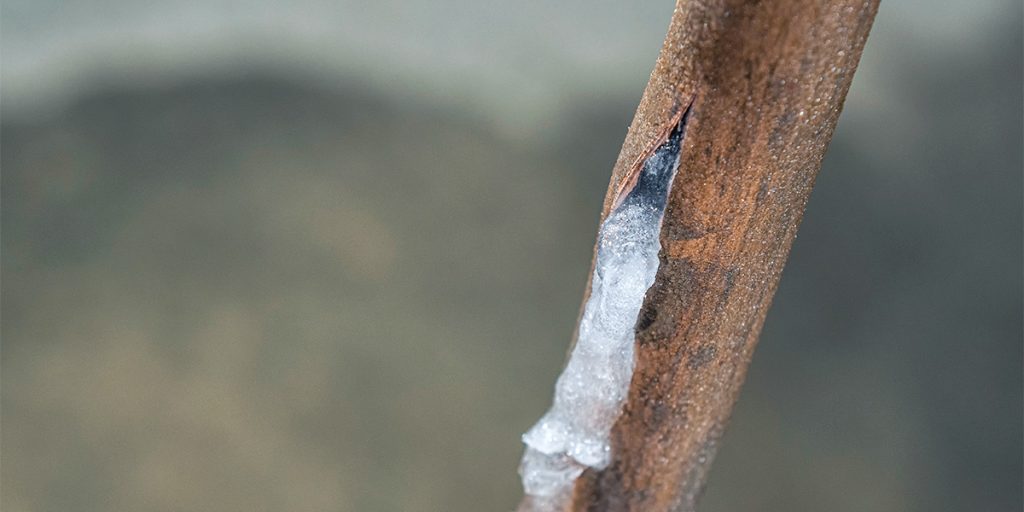
Most frozen pipe damage is preventable with the right preparation. You can take a few proactive steps now that can save you thousands of dollars in repair costs and the inconvenience of an insurance claim.
This guide provides a straightforward, actionable plan to protect your property before winter hits. We’re also breaking down clear steps to take if an emergency occurs. With the right knowledge and a trusted local expert ready to help 24/7, you can face winter with confidence.
Why Do Pipes Freeze and Burst?
When water freezes inside a pipe, it creates an ice blockage. This ice obstacle causes a pressure buildup between the blockage and a closed faucet. As more water tries to flow through the line, pressure increases behind the ice plug until the pipe wall can no longer withstand the force.
The critical temperature threshold is lower than many property owners realize. Pipes typically face serious risk after about four hours of sustained temperatures at 28° Fahrenheit or lower, not the 32° Fahrenheit freezing point most people expect.
A slow buildup of ice and pressure can cause even strong pipe materials, like PEX tubing, known for their reliability under freezing conditions, to eventually burst without proper maintenance and checks.
Where Your Home is Most Vulnerable to Frozen Pipes
Certain areas of your property face a higher risk during cold snaps.
Attics, Basements and Crawl Spaces
These areas get cold quickly because they lack consistent heat and often have poor insulation or drafts. Any water pipes running through your attic, basement or crawl space need immediate insulating attention before winter arrives.
Gaps in insulation, cracks in walls or foundations and any area where cold air enters freely are signs that your pipes are vulnerable. A frozen attic pipe can go unnoticed until significant damage occurs, making prevention essential in these hard-to-monitor areas.
Damp, unheated basements present an additional concern beyond frozen pipes. The combination of moisture and cold temperatures creates ideal conditions for mold growth, which may require professional mold remediation services if left unchecked.
Along Exterior Walls and in Garages
Pipes located in exterior-facing walls are vulnerable to freezing because they sit closest to outdoor temperatures. Kitchen and bathroom sinks often have plumbing running through outside walls, and these pipes may receive little warm-air circulation.
Garages amplify this risk because many homeowners keep them unheated or only partially heated. If your garage has water lines for a utility sink or connects to your home’s plumbing system, these pipes need protection.
Special Considerations for Vacant Properties
Vacant properties face increased risk when heating systems are turned off or set too low for extended periods. Without regular monitoring, a frozen pipe can burst and cause extensive water damage before anyone discovers the problem.
Essential winterization steps for vacant properties:
- Shut off the main water supply
- Drain the entire plumbing system
- Open all faucets to allow the remaining water to drain out
- Flush toilets to empty tanks
- Add antifreeze to the drain traps
These measures help prevent frozen pipes and the subsequent water damage.
Your Pre-Winter Checklist to Prevent Frozen Pipes
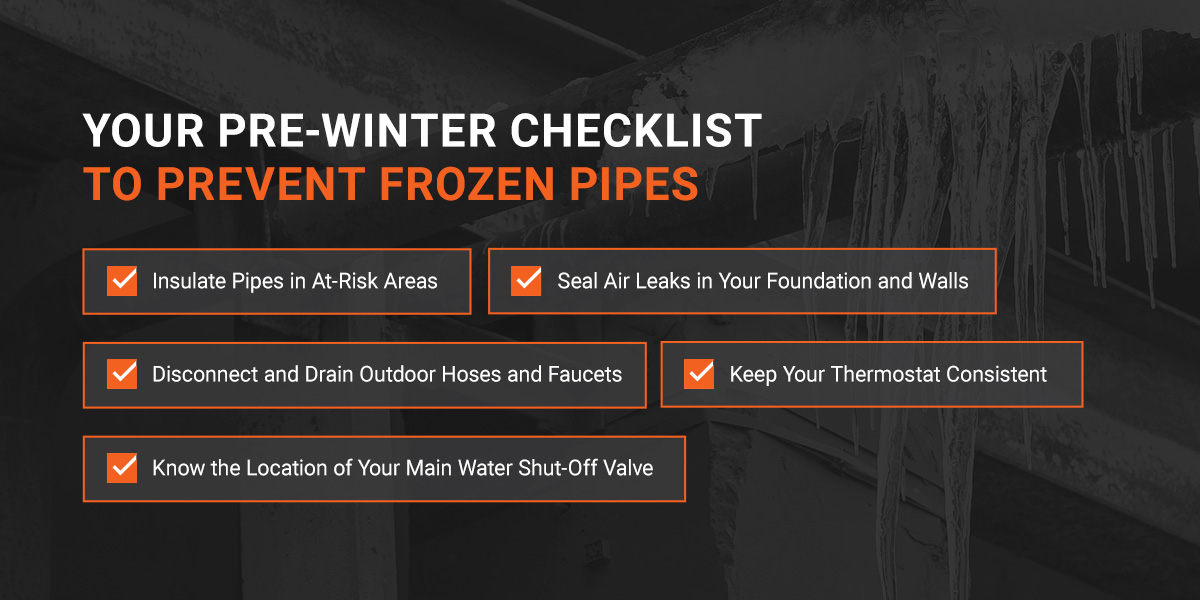
Following routine pre-winter maintenance is important for insurance purposes. Homeowners insurance may not cover water damage from a burst pipe if you have not taken reasonable steps to maintain the property and prevent freezing, according to the National Association of Insurance Commissioners.
These steps show you how to prevent frozen pipes and protect your property investment.
Insulate Pipes in At-Risk Areas
Pipe insulation creates a protective barrier against cold air. Foam pipe sleeves, pipe wrap and UL-listed heat tape are all readily available at hardware stores and easy to install yourself.
Foam sleeves slip directly over exposed pipes. Pipe wrap winds around the pipe length and secures with tape, while heat tape plugs into an electrical outlet and provides active warming. Both hot and cold water lines need insulation because both can freeze.
Seal Air Leaks in Your Foundation and Walls
Cold air infiltration accelerates pipe freezing. Explore your foundation, basement and crawl space looking for gaps around electrical wiring, dryer vents and pipes where they enter your home. Seal these openings with caulk for small gaps or expanding foam insulation for larger spaces.
Sealing these gaps keeps cold air out and warm air in, protecting pipes while also improving your home’s energy efficiency.
Disconnect and Drain Outdoor Hoses and Faucets
Outdoor faucets and connected hoses are extremely vulnerable to freezing. Water trapped in these lines can freeze, expand and damage both the outdoor spigot and connected indoor pipes.
Start by locating the interior shut-off valve for each outdoor spigot and closing it completely. Once the valve is closed, open the outdoor faucet to let all remaining water drain out and disconnect garden hoses for indoor storage. The outdoor faucet should remain open throughout the cold season to allow any residual water to escape.
Keep Your Thermostat Consistent
Lowering your thermostat significantly at night or when you leave for vacation can cause pipes to freeze. Maintaining a consistent temperature of at least 55° Fahrenheit throughout your home keeps pipes warm enough to prevent freezing.
The slightly higher heating bill is a small price compared to the potential costs of emergency water damage repair.
Know the Location of Your Main Water Shut-Off Valve
Every second counts during a burst pipe emergency. Locate your main water shut-off valve now, before you need it urgently.
Common locations include near the water meter, in the basement where the main line enters, in a crawl space or in a utility closet. Once you find it, label it clearly and make sure everyone in your household knows where it is and how to turn it off.
Practice turning the valve so you can act quickly if water damage occurs.
Immediate Actions to Take During an Arctic Blast
Arctic blasts bring prolonged periods of extreme cold to New England, often with temperatures well below freezing, putting pipes at risk. When weather forecasts predict these severe conditions, take immediate protective action. Let faucets drip during the coldest hours. A small trickle of running water prevents pressure buildup and reduces the likelihood of freezing.
Open cabinet doors under kitchen and bathroom sinks to allow warmer room air to circulate around plumbing. This simple step is especially important for sinks along exterior walls.
What to Do When Pipes Freeze
If you notice signs of pipe problems, take immediate action.
Confirm the Pipe is Frozen
The primary indicator is turning on a faucet and seeing only a small trickle or no water at all. Check multiple faucets throughout your home to isolate the location of the blockage.
Reduced flow from a single faucet suggests the frozen section is likely between the main line and that fixture. Multiple faucets showing the same problem indicate the blockage may be closer to where the main water line enters your home.
Safely Thaw the Frozen Pipe
Apply heat using an electric heating pad wrapped around the pipe, a hair dryer on the low setting or towels soaked in hot water, replacing them as they cool. Never use a blowtorch, propane heater or any open flame, as these create extreme fire hazards, can damage pipes and may cause rapid expansion that leads to ruptures.
Know the Warning Signs of a Burst Pipe and Call for Help
The following can signal an active leak requiring immediate burst pipe cleanup:
- The sound of rushing water inside your walls
- Pooling water
- Sagging and discolored ceilings or walls
Shut off the main water valve immediately to stop additional water flow, then call a professional restoration service right away. Water damage spreads quickly through building materials, and receiving professional mitigation quickly reduces long-term damage and repair costs.
Get 24/7 Emergency Help from Rhode Island Restoration
Rhode Island Restoration provides 24/7 emergency water damage response throughout Rhode Island and the surrounding areas. Our IICRC-certified restoration professionals are ready to respond immediately to frozen or burst pipe emergencies, delivering rapid mitigation and complete remediation services under one roof.
We handle the entire restoration process and bill insurance companies directly, so you can focus on what matters most. Contact us online today or call us for a free consultation or emergency service.