
Packing your bags for a well-deserved vacation should feel exciting, not stressful. Yet you may experience a nagging worry as you lock your doors and head to the airport — what if something goes wrong while I’m away? Many homeowners share concerns about home maintenance and preventing damage while going on vacation.
The good news is that most vacation-related home damage is preventable with the right preparation. This guide provides a comprehensive checklist to help you secure your home before you leave so you can truly enjoy your time away.
The Ultimate Vacation Home Maintenance Checklist
Whether you’re wondering how to prepare your house for a long vacation or need a quick reminder of essential tasks, these steps will help you safeguard your property from damage and leave with confidence.
1. Set Up Light Timers and Alert Security
Making your home look occupied is one of the most effective deterrents against break-ins. A vacant home is an easier target because it lacks guardianship, so creating the appearance of activity is essential.
Start by setting up smart plugs or traditional timers on lamps in multiple rooms. Program them to turn on and off at varying times throughout the evening to mimic your normal routine. For added security, consider investing in remote monitoring systems such as smart thermostats and water leak detectors. These devices let you check your home from anywhere and receive instant alerts if something goes wrong, giving you true peace of mind while you’re away.
If you have a home security system, notify your alarm company that you’ll be traveling. Confirm they have your current contact information and know how to reach you in case of an emergency.
2. Shut Off the Water Supply
A water leak is one of the most common and costly vacation disasters a homeowner can face. A single burst pipe or failed appliance hose can cause thousands of dollars in damage within hours. Shutting off your main water valve before you leave is a simple step that eliminates this risk. Here’s how to shut off the water supply:
- Locate your main water shut-off valve, typically found where the water line enters your home.
- Turn the valve clockwise until it stops.
- After shutting off the water, open a faucet on the lowest level of your home to drain any remaining pressure from the pipes.
Before you go, it’s also wise to check for any existing issues. Hidden water leaks can worsen quickly when left unattended. Addressing small problems now can help prevent major restoration costs later.
3. Set Your Water Heater to Vacation Mode
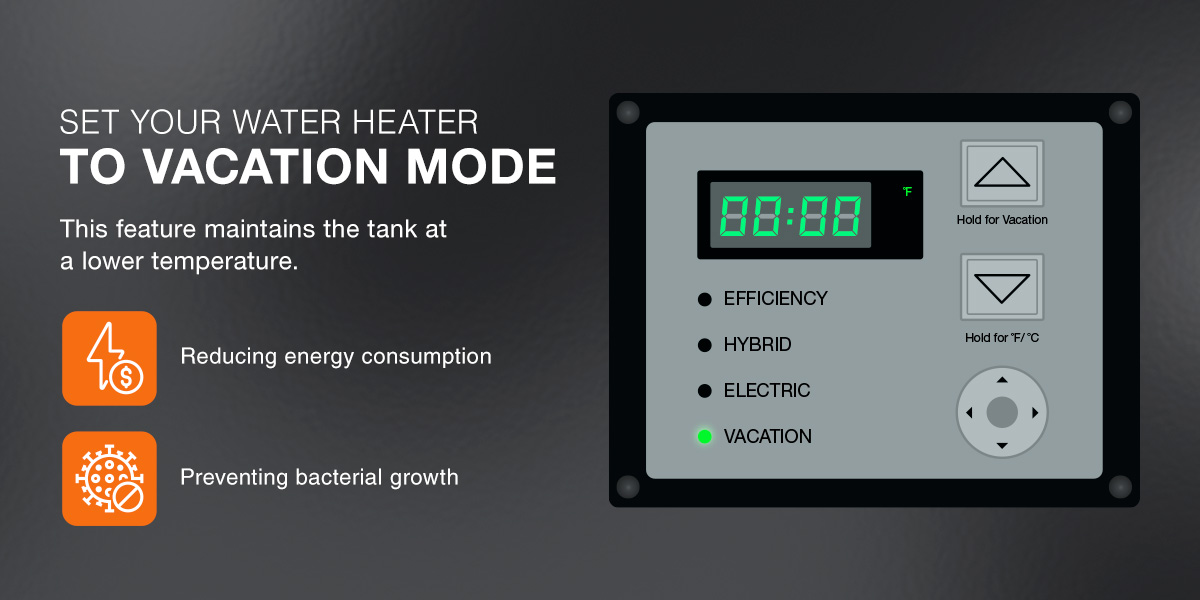
Most modern water heaters include a vacation mode setting designed specifically for extended absences. This feature maintains the tank at a lower temperature, reducing energy consumption while preventing bacterial growth. You should turn off your water heater when you’re away for long periods, but in most cases, vacation mode is the better option. It’s safer than a complete shutdown and can save you money on your energy bill.
If your unit lacks this feature, you can manually lower the temperature to its lowest setting. Consult your owner’s manual if you’re unsure how to adjust the settings on your specific model.
4. Adjust Your Thermostat for Seasonal and Humidity Control
Temperature and humidity control are critical components of any seasonal home maintenance checklist. The settings you choose depend on the time of year and your climate, but following these guidelines will help protect your home while you’re away:
- Seasonal: Resist the urge to turn off your air conditioning completely. Instead, set your thermostat no lower than 78°F in the summer and at least 68°F during colder months. This setting keeps indoor humidity levels low enough to prevent mold growth and protect pipes without wasting energy cooling or heating an empty home.
- Programmable thermostats: If you have a programmable thermostat, take advantage of its features before you leave. These thermostats can automatically maintain optimal temperature settings, saving energy and protecting your home.
- Humidity control: Keeping indoor humidity below 60% is essential to prevent mold growth. In humid climates or during summer months, consider running a dehumidifier on a timer or allowing your air conditioner to cycle periodically. Learning how to prevent mold while on vacation now can save you significant time and expense later.
5. Unplug Electronics to Protect From Power Surges
Summer storms can cause power surges that damage sensitive electronics, even when they’re turned off. Unplugging nonessential devices before your vacation helps protect your home and reduce energy consumption. It is a small step that can lower your utility bill and extend the life of your appliances.
Focus on unplugging these items:
- Coffee makers, toasters, blenders and microwaves draw phantom power, even when not in use.
- TVs, gaming consoles, cable boxes and sound systems are particularly vulnerable to power surges.
- Desktop computers, monitors, printers and routers should be disconnected to prevent damage from electrical spikes.
- Phone chargers, laptop adapters and power strips continue to draw energy when plugged in, even when no devices are attached.
Leave essential appliances like your refrigerator and any devices connected to security systems plugged in.
6. Manage Your Exterior and Ask a Neighbor for Help
The exterior of your home sends clear signals about whether anyone is present. An overflowing mailbox, piled-up newspapers or an overgrown lawn practically advertises that your property is empty, making it an attractive target for intruders.
Take these steps to maintain the appearance of occupancy:
- Arrange mail and package management: Use the U.S. Postal Service’s mail hold service to pause deliveries, or ask a trusted neighbor to collect your mail and packages daily.
- Schedule landscaping or snow removal: Depending on the season, arrange for someone to mow your lawn or clear your driveway while you’re gone.
- Remove spare keys from obvious locations: Never hide keys under doormats, planters or fake rocks — these are the first places intruders check.
- Ask a neighbor to park in your driveway occasionally: A car in the driveway suggests someone is home and adds another layer of deterrence.
A helpful neighbor is your best defense against visible signs of vacancy. Their presence and vigilance can help prevent problems before they start.
Enjoy Your Vacation With Peace of Mind
Preparation is your best defense against property damage while you’re away, but even the most diligent homeowner can’t predict every scenario. When the unexpected happens, Rhode Island Restoration is here to help.
We specialize in water, fire and storm damage restoration for residential properties throughout Rhode Island. Available 24/7, our certified professionals work for you, not the insurance company, to restore your home quickly and correctly.
For a free consultation or immediate emergency assistance, call 401-834 FIRE (3473) or contact Rhode Island Restoration online today.