
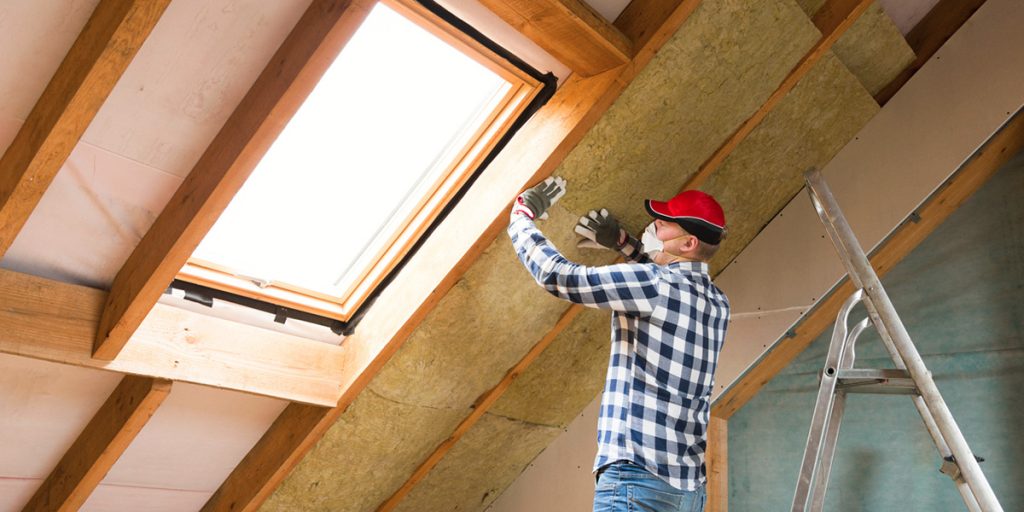
Discovering wet insulation after a roof leak or burst pipe puts homeowners in a challenging position. While the ceiling stain may look manageable, what you see is rarely the full story. Behind the drywall or in the attic, the insulation may have absorbed and trapped gallons of water.
Not all insulation materials respond to water in the same way. Explore which materials can be salvaged, which must be removed and why professional moisture detection is the only way to avoid costly mistakes that put your home at risk.
Can Wet Insulation Dry Out?
Insulation acts like a sponge. Even if your drywall feels dry to the touch, the paper backing or center of the insulation can hold moisture for weeks. This trapped water sits quietly behind walls and above ceilings, creating ideal conditions for mold growth, bacterial colonies and damage that you may not see until it’s too late.

Mold begins growing on damp organic materials within 24-48 hours. The paper backing on fiberglass batts, cellulose fibers and wood studs adjacent to wet insulation are all ideal organic materials where mold colonies can establish quickly. Once the spores take hold, they can spread through enclosed spaces — especially those spaces with minimal airflow.
Wet insulation also causes secondary water damage. Water can saturate structural framing, softening wood and compromising stability, while metal fasteners rust and the drywall backing may deteriorate. The insulation becomes a reservoir that continuously feeds moisture into surrounding materials, even after the original leak stops.
When severe leaks leave standing water, emergency water extraction is essential. It helps eradicate excess moisture and opens the door for an accurate drying assessment. Otherwise, the volume of water overwhelms any salvage attempt.
Which Insulation Can Be Dried in Place?
Wet insulation doesn’t dry out on its own. Whether drying in place is possible and safe depends on the type of insulation you have. Some materials release moisture readily when conditions allow. Others trap water at their core and become incubators for microbial growth, no matter how many fans you run.
Replacing wet insulation is preferable because moisture can permanently compromise thermal resistance. Even insulation that appears dry may have lost significant R-value. The following are major insulation types we often see in modern homes, and whether they can be dried adequately.
Fiberglass Batt Insulation
Fiberglass batts, the pink or yellow material in most attics, present a complicated scenario. Glass fibers don’t absorb water, but the problem lies in what surrounds those fibers. Paper or foil facing attached to batts absorbs moisture readily and provides the organic material that mold needs to colonize.
If the water source was clean (for example, fresh water from a burst supply line) and exposure was brief, fiberglass batts might dry successfully under specific conditions. The facing must be removed, air movement must be aggressive and sustained, and the batts must maintain their loft.
Compressed fiberglass loses its ability to trap air, and without trapped air, insulation provides no thermal resistance. If water saturation compressed the batts and they haven’t regained their original thickness after initial drying, they’re functionally useless regardless of moisture content.
Blown-In Fiberglass and Loose-Fill Insulation
Blown-in fiberglass differs fundamentally from batts despite sharing the same base material. When loose fiberglass gets saturated, it packs down into a dense, waterlogged mass. Since air can’t penetrate to the center, surface drying becomes meaningless because the core remains wet, creating a moisture trap against ceiling joists or within wall cavities.
Even after the surrounding structure appears dry, pockets of wet insulation continue feeding humidity into enclosed spaces and allowing mold to establish in areas you can’t inspect without demolition. The only reliable approach involves removal of all affected material, thorough structural drying and reinstallation once moisture readings confirm the space is safe.
Cellulose Insulation
Cellulose insulation consists of recycled paper products treated with fire-retardant chemicals and is highly absorbent. A single section of wet cellulose can hold several times its dry weight in water, and becomes extremely heavy when saturated, creating a real risk of ceiling collapse if left in place.
Cellulose must be removed immediately after any significant water contact. Attempting to dry it in place wastes time during the critical 24-48 hour window when professional mold remediation can still prevent colony establishment.
Spray Foam Insulation
Spray foam insulation divides into two categories with dramatically different water responses. Closed-cell spray foam features a dense, sealed structure that prevents water absorption in most scenarios. This type often survives water exposure without removal, since the foam itself stays intact and moisture runs off rather than soaking in.
By contrast, open-cell spray foam behaves like a sponge, absorbing moisture throughout its structure. Water can completely saturate the material, and the interconnected air pockets that provide insulation instead become pathways for moisture migration.
When assessing spray foam after water damage, identification is the first step. Closed-cell foam can typically be dried successfully, but open-cell foam requires removal. The visual difference isn’t always obvious to homeowners, making professional assessment critical.
How to Dry Out Wet Loft or Cavity Wall Insulation
For the limited scenarios where drying wet insulation is viable, the process demands controlled conditions, proper equipment and realistic expectations. Here’s how to dry out wet insulation.
Loft Insulation
If you’re wondering if wet attic insulation will dry out, the answer is probably not, since loft insulation faces unique challenges. Specifically, heat rises, creating temperature differentials that often slow evaporation in enclosed attic spaces.
For potentially salvageable fiberglass batts, try to increase ventilation by opening gable vents and soffit vents. You should also remove the facing material, as paper backing traps moisture against fibers. Position fans to move air through the entire depth of the insulation, not just across the surface. Attic temperatures above 80° Fahrenheit aid evaporation, but high heat without adequate airflow creates ideal conditions for mold growth.
Monitor the progress with calibrated meters that measure moisture content within the insulation layer, not just surface readings. Even under aggressive drying, it can take days or weeks to reach a safe moisture content, depending on saturation level and outdoor humidity.
Wall Cavity Insulation
Wall cavity insulation presents the most difficult drying scenario, since vapor barriers trap moisture behind sealed assemblies where air circulation can’t reach. Running a dehumidifier in the room accomplishes nothing, since the barrier prevents moisture extraction.
Removing the drywall on at least one side to allow airflow is the only way to prevent mold growth in enclosed spaces. Remove the facing material and create cross-ventilation by installing fans at the top and bottom of the cavity to promote air movement through the full depth.
For the most part, wet insulation will never be the same, even if you do manage to dry it. From heat concerns to limited airflow and other problems, your home and family are better off with new insulation.
How Long Does It Take Wet Insulation to Dry?
Drying timelines depend on material type, saturation level, temperature, humidity and airflow. Under ideal conditions with professional equipment and ventilation, fiberglass batts, wall cavity insulation and attic/loft insulation can dry out in weeks. Again, cellulose or blown-in materials cannot be dried effectively.
Aggressive airflow, controlled humidity and temperatures above 70° Fahrenheit are necessary for full drying. DIY efforts using box fans will extend drying timelines and often prove inadequate. Poor drying leaves residual moisture that causes mold growth weeks or months later. Full replacement is always a better choice.
The Hidden Dangers of DIY Drying
Box fans and dehumidifiers feel proactive, but physics works against DIY efforts to dry areas behind walls and above ceilings. This approach turns well-intentioned drying into expensive mistakes.

Trapped Moisture
Vapor barriers exist to stop moisture from moving through wall and ceiling assemblies. The plastic sheeting or paper facing designed to protect your home during normal conditions becomes a trap when water gets behind it. A dehumidifier running in the room can’t pull moisture through a sealed barrier, so the water stays exactly where it is, saturating insulation and structural materials while visible surfaces appear to dry.
This creates false confidence, since the drywall feels fine and the air in the room measures dry on a hardware store moisture meter. Meanwhile, behind that vapor barrier, wet insulation continues to feed moisture into the wood framing. As a result, studs soften, and mold colonies can spread across surfaces you can’t see without cutting open the wall. By the time visible signs appear, the damage often requires extensive remediation that could have been prevented.
Mold Spores and Bacterial Growth
Mold growth in enclosed spaces isn’t just an aesthetic problem. Spores circulate through HVAC systems when insulation near ductwork remains damp. These microscopic particles can cause significant health concerns, triggering allergic reactions, aggravating asthma and causing respiratory irritation.
The concern extends beyond visible mold patches. Colonies establish in hidden areas, like the cavity space between basement ceiling joists, behind knee walls in finished attics or in wall sections that feel dry from the interior side. Once established, mold can spread to adjacent materials.
DIY drying attempts often create conditions that accelerate bacterial growth alongside mold. Standing water that sits for more than 48 hours while homeowners wait for fans to work crosses from category one (clean water) into category two or three (contaminated water) as bacteria multiply. At that point, simple drying no longer addresses the health hazard.
Denied Insurance Claims
Insurance companies expect mitigation, not just drying. When policyholders attempt DIY remediation, and mold reappears six months later, the secondary claim is often denied. The insurer’s position is straightforward — you failed to follow proper removal and drying standards after the initial loss, so subsequent damage resulted from inadequate mitigation rather than the original covered peril.
Professional restoration technicians follow IICRC S500 standards, which insurance adjusters recognize as the industry benchmark for water damage restoration. These protocols specify moisture thresholds, drying timelines, removal criteria for different materials and documentation requirements. When restoration work meets S500 standards, insurance companies are more likely to accept the scope of necessary work with minimal dispute.
The Importance of Professional Moisture Mapping
Slow leaks and drips can degrade your home’s interior for months or years if not caught early, elevating humidity and encouraging mold growth long before the ceiling stain becomes obvious. The difference between guessing and knowing comes down to equipment and professional testing.
Thermal Imaging
Professional moisture mapping uses thermal imaging and calibrated meters that detect moisture behind barriers. This technology reveals the actual extent of saturation rather than relying on surface indicators that mislead homeowners into thinking the problem has resolved itself.
Infrared cameras reveal cold spots invisible to the naked eye. Water evaporation creates temperature differentials that show up clearly on thermal scans. Areas of active moisture appear cooler than surrounding dry materials. This technology detects saturation behind sealed vapor barriers, above finished ceilings and within wall cavities where access doesn’t exist without demolition.
The touch test tells you whether the surface feels damp. Thermal imaging tells you whether moisture remains in the material structure. Calibrated moisture meters provide numerical readings that track drying progress over time and verify when materials have reached safe moisture content levels.
How Rhode Island Restoration Can Help 
Rhode Island Restoration’s approach addresses both immediate water removal and long-term moisture management. Our process begins with comprehensive mapping that identifies all affected areas, including spaces where water migrated beyond the obvious damage zone. This documentation guides our restoration work and provides insurance carriers with the detailed records they require for claim approval.
Affected insulation comes out only when salvage isn’t viable. We don’t remove materials that can be saved through proper drying protocols. When removal is necessary, we extract only what must be removed to preserve your property and control costs, while ensuring no hidden moisture remains.
Industrial dehumidifiers and air movers create the controlled environment necessary for thorough drying. We monitor moisture levels continuously until readings confirm the structure meets safe thresholds. Only then does reconstruction begin. This sequenced approach prevents the premature close-up that traps residual moisture.
The one-stop approach eliminates coordination headaches. You’re not managing separate contractors for water extraction, mold testing, insulation replacement and drywall repair. Rhode Island Restoration handles the full scope under one contract.
Contact Our Experts for Water Damage Restoration Today

Waiting to see if wet insulation dries on its own is an expensive mistake. What feels like caution today becomes structural rot, failed insurance claims and remediation costs tomorrow. Rhode Island Restoration provides 24/7 emergency response with IICRC-certified technicians who use proven protocols that protect your property and insurance coverage.
Don’t guess with hidden water. Call 401-414-1111 now for water damage restoration services.


